Meet the Founder
Marine engineer. Self-taught developer. Trusted by 50,000+ users.
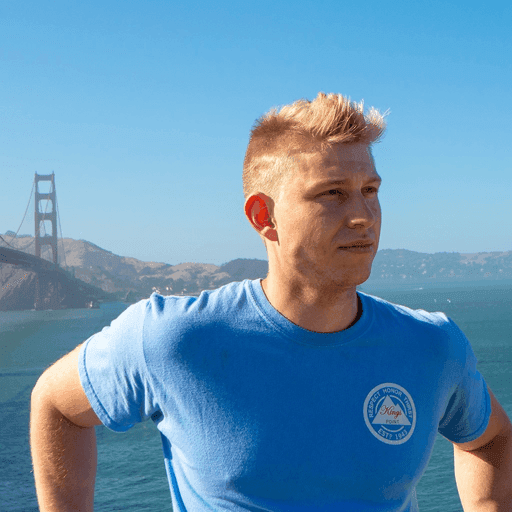
Alex Hughes
Founder & CEO, Lokey Labs
Creator of Sea Trials
Alex is a licensed marine engineer, former U.S. Navy Reserve officer, and self-taught software developer — a rare intersection of two industries that couldn't be further apart. Software reinvents itself every few years; the licensed trades have done things largely the same way for decades. For more than five years, he sailed commercial vessels and helped run operations at The Vane Brothers Company. On the side, he taught himself to code and built Sea Trials from scratch. For five years he ran the whole thing solo — writing every line of code, shipping to every platform, answering every support ticket. Today Sea Trials supports 50,000+ mariners with a 4.8-star average across every app store. The platform behind it now powers Lokey Labs.
Part 01
The maritime career
Alex started in the maritime industry when he was just 15 — painting a water barge on the docks for The Vane Brothers Company in Baltimore, Maryland. The next year, he moved into their mechanic shop, rebuilding John Deere diesel engines. By 17, he was out on Vane Brothers tugs and barges — spending his summers in New York Harbor as a deckhand on a 4,200-horsepower towing vessel pushing a 50,000-barrel barge. The following year, he earned his Tankerman Person-In-Charge endorsement, loading and discharging dangerous liquid cargoes before he could legally drink.
At 18, he headed to the U.S. Merchant Marine Academy at Kings Point. He was elected Class President, sailed on commercial and Military Sealift Command vessels around the world, and delivered the commencement address for the Class of 2017.
After graduating with a B.S. in Marine Engineering, a commission as a Navy Reserve officer, and an unlimited horsepower U.S. Coast Guard engineer's license, Alex began a five-year MARAD sailing obligation, shipping out with AMO as an engineer on tankers. From there he returned to his roots at Vane Brothers, sailing their vessels for years. When the company expanded to Seattle, he moved out there too, splitting his time between helping as a vessel supervisor and sailing on the vessels. He later transitioned to fleet supervisor in New York Harbor — bouncing between the engine room and the office for years, with Sea Trials growing alongside the whole time.
Part 02
Building Sea Trials
A year into his sailing obligation, on a tanker in 2018, Alex was reflecting on the painful process of studying for the unlimited horsepower license he was now sailing on — and realized USCG exam prep hadn't moved in decades. Outdated books, zero feedback, no analytics. Half the questions referenced an illustration printed in a separate 500-page volume you had to flip through page by page to find. The moment he stepped off the ship, he started teaching himself to code and built the first iteration of Sea Trials, shipping it while still sailing full-time.
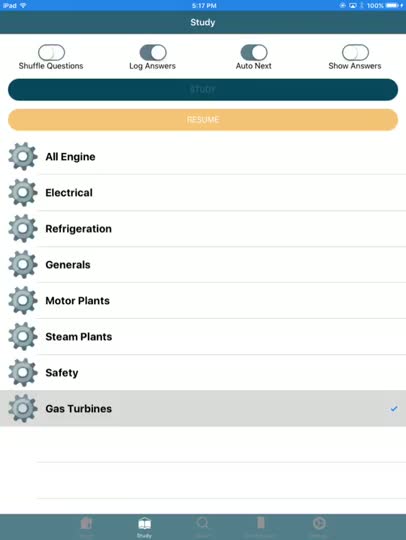
From there he picked up web, then Android, then full-stack development. In an industry as old as maritime, where ships routinely lose signal for days at a time, working offline wasn't a feature to bolt on — it had to be designed into every layer of the product from day one.
For five years he ran the entire platform solo — development, design, customer support, analytics, everything — while maintaining a full-time maritime career. Sea Trials grew from zero to more than 50,000 mariners with an average 4.8-star rating across every app store.
In 2023, Sea Trials shipped one of the first AI tutors built specifically for the USCG exam — more than a chatbot, a foundation model grounded in the released USCG question pool, the CFRs, and the regulations behind every answer. That same year, Alex stepped off the boats to focus on Sea Trials full-time.
Part 03
Lokey Labs today
Eight years later, the engine that started as Sea Trials is the foundation of Lokey Labs: offline-capable, cross-device sync, and native apps on iOS, Android, Windows, macOS, and the web from a shared codebase.
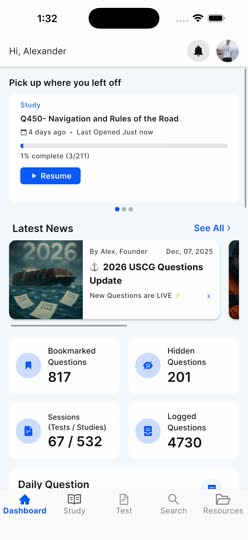
Most apps stop working the moment they lose signal. At sea, that's most of the time. For pilots, paramedics, and engineers in the field, the gap is just as wide.
Five platforms, one codebase, real-time sync, fully offline — that has to hold whether a user is on Wi-Fi at home, on a tanker mid-Pacific, or in a hangar with no reception. Underneath it is a custom CI/CD pipeline that ships updates to the App Store, Google Play, the Microsoft Store, macOS, and the web in a single flow, on top of a backend engineered to keep every device in step.
In 2026, Alex rebranded the company as Lokey Labs and pointed the same engine at adjacent licensed professions — aviation, medical, and the other verticals where exam prep never caught up. Lokey Labs builds the entire product stack in-house — application code, web platform, infrastructure, and AI systems.
The split is clean: domain experts own the content, Lokey Labs owns everything else — the offline-first apps, the AI tutor architecture, the cross-device sync, the App Store pipeline, the analytics. Partners share the revenue on every learner they bring in.
After five years building Sea Trials alone, Alex runs a team that holds the same bar across every new vertical.
Licenses & Credentials
- B.S. Marine Engineering & Shipyard Management — U.S. Merchant Marine Academy (Class of 2017)
- Unlimited Horsepower Engineer — Any Ocean (USCG)
- Former LT (O-3) — United States Navy Reserve (Individual Ready Reserve)
- Certified Scrum Product Owner (CSPO)
- Certified ScrumMaster (CSM)
- Tankerman Person-In-Charge — Dangerous Liquids (Barge)
- Refrigeration Transition & Recovery — Universal Certification
Technical Skills
Languages & Frameworks
Dart, Flutter, TypeScript, Node.js, Swift, React, Next.js, HTML/CSS
Backend & Data
Supabase, PostgreSQL, Firebase, Cloud Functions, PowerSync, BigQuery
AI & ML
OpenAI API, Google Vertex AI, Gemini, on-device inference (Gemma/LiteRT)
DevOps & Tooling
GitHub Actions, Codemagic, Melos, Turborepo, Docker, custom Rust CLI tools
Design & Product
Figma, UI/UX design principles, user research, A/B testing, analytics-driven iteration
Leadership
Agile/Scrum, team management, technical architecture, cross-functional coordination
The journey
From painting water barges at 15 to shipping one of the first AI tutors in licensing education.
Age 15
First Job at Vane Brothers
Started painting a water barge on the docks for The Vane Brothers Company in Baltimore, Maryland. The next year, moved into the mechanic shop and learned to rebuild John Deere diesel engines.
Age 17
Out on the Boats
Spent his summers working on Vane Brothers tugs and barges in New York Harbor — a deckhand on a 4,200-horsepower towing vessel pushing a 50,000-barrel barge. Earned his Tankerman Person-In-Charge endorsement the following year, loading and discharging dangerous liquid cargoes before he could legally drink.
2013
Headed to Kings Point
Graduated high school after leading the robotics team. Accepted into the United States Merchant Marine Academy — Marine Engineering & Shipyard Management.
2013–2017
U.S. Merchant Marine Academy
Elected Class President. Sailed on commercial and Military Sealift Command vessels around the world. Wrote his first real code — Python ship trackers — during a summer internship at a defense contractor.
2017
Graduated & Commissioned
Graduated with a B.S. in Marine Engineering, delivered the commencement address, and commissioned as a U.S. Navy Reserve officer. Began a five-year MARAD sailing obligation with AMO as an engineer on tankers.
2018
Founded Mariner License Prep
USCG exam prep had no modern technology — outdated books, zero feedback, no analytics. The moment he stepped off the ship, he started teaching himself to code and built the first iteration of Sea Trials, shipping it while still sailing full-time.
2018–2023
Sailing, Vane Brothers & Sea Trials
Sailed as an engineer with AMO on tankers, then returned to Vane Brothers, sailing their vessels for years. When the company expanded to Seattle, moved out there too — splitting time between helping as a vessel supervisor and sailing on the vessels. Later transitioned to fleet supervisor in New York Harbor, bouncing between the engine room and the office while Sea Trials kept growing alongside.
2023
Built an AI tutor that knows the USCG exam
One of the first AI tutors built specifically for the USCG exam — a foundation model grounded in the released USCG question pool, the CFRs, and the regulations behind every answer. That same year, stepped off the boats to focus on the platform full-time.
2023–2026
Scaled to 50,000+ Users
Grew Sea Trials into the leading USCG exam prep platform — a 4.8-star average rating across every app store, every USCG license type covered, native apps on every device. Built out a team of engineers.
2026
Rebranded as Lokey Labs
Turned the same platform engine that powers Sea Trials toward adjacent licensed professions — aviation, medical licensing, and beyond. With a growing engineering team, Lokey Labs builds the full stack in-house: apps, web platform, infrastructure, and AI systems.